Tuesday, May 24, 2016

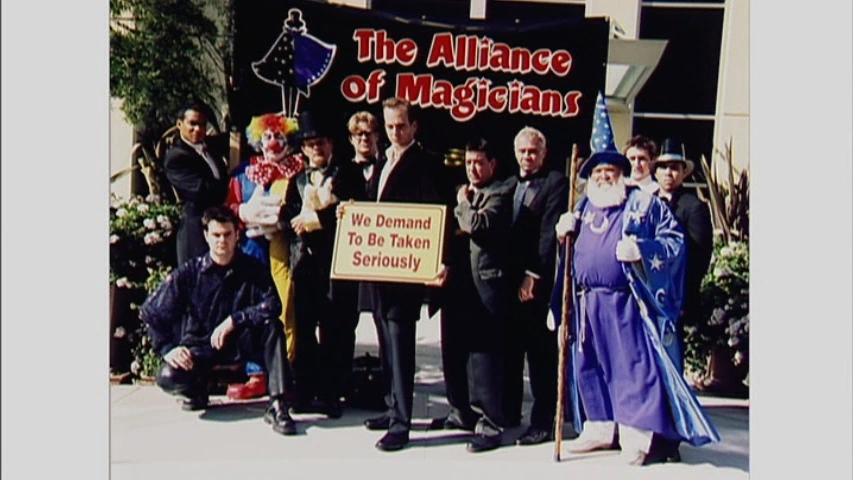
We Demand to be Taken Seriously

I have been writing passionately on this blog about video games for the past four years. I love doing it. Every post that I right is in celebration of video games as an art form, and the things that we can take away from them. I write this way because I believe that there is still a stigma that comes along with the moniker of 'gamer'. I write to dispel that superstition of gamers being basement dwelling wastoids who don't do anything but play video games.


This image kind of captures how I feel about my defense of video games. I just want to be taken seriously. I don't want to be looked down upon for my passion. Rejection sucks, and to feel a slight tinge of that every time that I mention that I love video games to someone who doesn't play or understand video games kind of hurts. I have such a passion that burns within me for the medium that it consumes me. I am all about video games, and I love them dearly. Video games have helped me through some rough times in my life. Video games have even saved my life. I know that video games have done the same for many others around the world. Gaming is more than just a hobby or a pastime; it s a cultural phenomenon.

Sure, I could go on about how video games have started beating out the box office since Halo 3 back in 2007, or I could talk about all of the scientific studies that show how much playing video games can improve one's mental capacity, but none of that matters to me. Those things are just heartless numbers and stats that gamers like myself would use to lean on to support the claim that video games are not a waste of time. I've once heard it said that writers often use statistics in the same way a drunkard uses a lampost: for support, rather than illumination. Basically a "nuh-uh!" but with numbers. Video games are so much more than the amount of money that they make opening weekend, or how much the entire industry has grossed over the past five or ten years. Video games are an experience, and developers work very hard to create the experience of their video games.

There are many people out there who speak just as passionately about video games as I do, though none really address the more abstract things that I do. However, the way that most game reviewers or journalists talk about games is in a way that seems stagnant and clunky. These people speak in a language that only people who play video games can understand. When I get the chance to be a writer for one of the more prestigious and more well known video game sites, I want to change that. I want to change the way that video games are talked about. I want people who don't play video games to know more about them.


Because the way that games are broken down in reviews talks about each individual element of the game, rather than speaking to the experience as a whole. I know that when I talk face to face to people who don't play video games, they can see the passion that I have for video games, and those same people can see that passion come through in my writing. I'm very proud of my voice that I've found in my writing. I want that to be the new standard of conversation among gamers. Because going through a checklist of items, and ticking them off one by one with a brief summation of what was subjectively good or bad about said item is so boring. Video games are not boring! or at least they shouldn't be.

Video games have evolved far beyond that of Pac-Man or Space Invaders. Games now tell stories, and engage the player in ways that were not possible back when they first came out. Games are no longer just about having fun, but telling stories in a way that only video games can. There is something that only the player experiences when they pick up a controller and play the game. This is an amazing experience. Having direct control over a character in a story is something that was only dreamed of before video games. Who hasn't read Harry Potter and thought about the misadventures that they would get themselves into? Who hasn't watched Star Wars and thought about becoming a Jedi, or joining the Rebels? These experiences can actually be found in video games, and it's awesome!

Video games are awesome, and I want people to know this. I want people to understand why I think that video games are awesome. Because they are more than something that just improves my mental capacity, or something that makes a lot of money. Games are more than just a brief summary of a story, followed by an analysis of its gameplay, followed by its graphics, followed by its presentation, in that order. Video games mean so much more to me than simply a waste of time. Video games have brought me before the gates of the deepest darkest places of my heart and let me fight my way out and overcome that darkness. Video games have given me something to lean on when nobody else seemed to be around. Video games understood me, and spoke my language when nobody else would listen. Gaming is a passion. It is a way of life, that for some reason is still looked down upon. Video games are here to stay, and they are not just some irrelevant way to kill time. Video games are leaving a significant impact on cultures all around the globe, and to deny them of that significance is a disservice to the advances that they have made over the years, and the ways that they have changed the lives of millions. Because we gamers play them all the time does not mean that we are useless. It does not mean that we are insignificant. It does not mean that we simply exist and take up space, only to waste time and the air that we breathe. We are gamers, and we love what we do. We matter, and we should not be overlooked or passed by because of our passion.

Monday, May 16, 2016

Hey! That's Me!

There is a lot of discussion revolving around the issue of representation in media these days. Some of it is kind of BS. Some studios seem to do it to hit a certain demographic, or maybe just to spice up their show or movie. On the other side of the conversation, people are actively apathetic about the whole issue and just miss the point entirely. That, "it really doesn't matter what age, race, gender, or sexuality the character is". Then again, this is probably coming from the perspective of people who have been represented by countless protagonists and main characters. IE white, straight, males. Now, being a white, straight, male, I'm okay with seeing these characters. On the other hand, I'd like to see some variety. Not just for my sake, but for the sake of the kinds of people that these characters would represent.

Representation in media is important, because it kind of sends the message of "if this character can do it, so can you", and that's a really cool thing. I don't see enough black characters in the video games that I play. When I do, they aren't very well written, and they don't serve much of a purpose to the story. That's another issue that I have, but I'll get to that later. The fact of the matter is, that everybody needs someone that they can look up to. There's a phrase that I hear all the time when I'm struggling with my depression, and that is "you're not alone", and I know that, I just wish that I could see more of it. If a character in a tv show, movie, or video game has a mental health disorder, that seems to be their only facet. Kind of like Eeyore, but less well rounded.

When I see a character that has something that does not adhere to the "standards of society", that fact seems to be their only character trait. For example: if a character is a lesbian, they will have a scene where they are making out with their lover. EDGY!!!!! and that character will serve no further purpose. As in, they will not help out the main character, move the story forward, will not be included in any pivotal scenes. They're just there. As if to check off a tick box on a sheet of paper that has a list of items to improve ratings. That isn't really fair. It isn't fair to the people who watch that show and are actually lesbians. I'm not a lesbian. In fact, I'm the antithesis of one, as mentioned earlier. However, I've met a few lesbians, and they're not bad people, and guess what? They do more than overtly make out with their girlfriends. How about that? It's kind of strange to me that the writers wouldn't flesh out a character like that. I see the same thing with characters who are gamers. The only aspect of their personality is that they play video games. They are ignorant to the world around them, and they don't care about anything but getting the high score. High scores aren't even a thing anymore. It's like when a TV show tries to make a computer hacking program, but the designers don't know anything about hacking computers.

Video games are kind of special, because they allow for character customization. I like Mass Effect for this reason. I like to play as the female Commander Shepard, because characters in the game will react differently to her because she's a woman. Who would believe that sexism still existed one hundred years into the future? I can also change the race and sexuality of the character. However, those only seem to be purely cosmetic choices as nothing really changes. The voice actress is clearly white, and nobody gets uncomfortable if my character is with an alien, or a character that is the same gender.

Saints Row IV on the other hand has great customization. I can make a character that is a large black woman with the voice of Nolan North. Why? I don't know. I just wanted to. The character is completely something of my own design, and nobody really cares. I can romance whomever I want, and I can always change the race, bodytype, voice, and gender of the character. It doesn't really matter who or what I am in that game. I still kick ass.

Then there are games that present me with characters that are out of my control. Games like Gone Home, or Life is Strange both have female protagonists that are going through some pivotal changes in their lives, and the characters feel well rounded and deep. These characters are cared about and respected by the writers because they want them to be memorable and likeable. Or dislikeable. These characters make decisions and act on their own, with their own motivations, and it makes the player feel for them. How about in The Wolf Among Us, with the character of Snow White? She does her best to keep things in order, but has some conflicts of interest because of the situation that befalls her. Yet she still tries her best, even if that means getting in the way of the player. These actions make the characters have a sense of autonomy, that they aren't just another NPC who repeats the same line of dialogue, or gives out quests. These are characters. Whether they are black, white, male or female, straight or gay, it is important that they matter.

We all want to be on the silver screen, but we know that probably isn't going to happen. That's why it's important that we see someone who is kind of like us up there, and we want to be cool. We want to be important. We want to help. Heck, we want to be the main character. Representation is important because it can kind of give us that chance. That we can see ourselves in those characters. It's important that writers of all kinds of media treat these characters with respect, because they are more than just that one facet. I really like video games, but I like movies too. I work a job, I have friends, I have good days, and I have bad days. So does everyone else in this world. I know that this argument has been made thousands of times before, by people who are way smarter than me, but I wanted to throw my two cents in. I may be the majority here, but I feel for the little guy. They deserve their time in the spotlight as well.


Monday, May 2, 2016

Remember This Old Gem?

If you go to any subreddit, forum, or Facebook Fanpage that is based around video games, you will undoubtedly find some kind of post relating to a game from the days of yore. Gamers are absolutely obsessed with the past. There always seems to be some kind of outcry whenever a new sequel, or even a new game entirely, is released and how it isn't as good as the old one. Because of this, gamers have an adversity to something new, and as a result: have a very closed mind when it comes to video games.

Gaming is something that most of us have grown up with in this generation. It was something that we all did as children, and it reminds us of those days when all we had to worry about was doing homework and waking up for school the next day. Admittedly, those were some good times. Now, things have changed. We have matured, in more ways than being able to play a game with a mature rating. We have responsibilities, we have (hopefully) experienced more in life, we've taken in new movies, books, television shows, and even video games. Yet, people have this strange fixation to the past. Whatever version of that thing that they first experienced is the true original and anything that tries to replicate or improve upon it is worse or wrong. What is the point of this?

It may be a bit extreme to say, but if we keep up with this kind of mindset, the gaming industry will never mature or expand. We will continue to have the same Call of Duty, Assassin's Creed, Battlefield, and Pokemon game every year until they stop making video games (which they wont). The gaming industry feeds off of our nostalgia and the safety that we feel in the familiar. Gamers are too critical of adversity, which is ironic considering that adversity is the driving force behind every single video game ever created. Gamers act like children if things are not held to their ridiculously high standards, or are reminiscent of a game from their youth.

We, as gamers, need to be more accepting of new games. We need to be accepting, yet still somewhat critical of new games, even if they have flaws. We need to have a more keen eye when analyzing new games, as opposed to administering a blanket statement of "it's not as good as the original".

I revisit games of my youth all the time. Some of them still hold up, and some of them don't. I'd like to say that all of my old games take me back to the living room of my old house when I would sit on the floor in front of the TV and play them for hours on end. Yet, as I sit here writing this and looking at all of the games that I have amassed and played throughout my life and career as a gamer, I realized that my taste in gaming has changed. I still appreciate the games from back in the day, but more so in a manner that reflects how far we have come. There is value in the classics. As I said before, there are still some games that hold up and are still a lot of fun to play, but again, not all of them are.

I don't think that there is anything wrong with nostalgia. I think that going back and having fun with old games is perfectly fine. However, it is possible to have a sort of overdose on nostalgia, to the point where everything moving forward must be the same as it was in the past. Developers hear this feedback, and are thereby restricted on how they move forward. There will always be the small yet vocal minority who will shout from the mountaintop of every forum that is accessible to them, but this causes others to join in with them and grow their numbers. It's the reason that we have so many HD remakes of so many games, even ones that were released on the last generation of consoles less than ten years ago. Gamers pine for the classics and are not happy until they have the exact same experience as they remember. That's why the market is flooded with knock-off after knock-off that is "never quite as good" because it doesn't have the same name as the game that gamers remember.

I may be exaggerating a bit here, but I'd like to think that my point here still stands. I play lots of different games, and I keep an open mind to a lot of them. Yes, there are new games that are released these days that are genuinely bad, but there are a lot of games out there that are objectively good but still have a few flaws. I want gaming to progress. I want gaming to diversify. I want gaming to try new ways of creating games; in the way we play, in the way we experience stories, in the way that we game. Gamers have the power to shift the paradigm of the industry with what games they play. If Activision continues to see incredibly high sales numbers for Call of Duty, there's going to be another Call of Duty just like the last one. If gamers gravitated more towards indie games that try something new, that would change how the market looks. That developer would be able to continue to create more games that experiment with the idea of what makes up a game. I know that you can't change everyone's mind, but you can start by changing your own. Try out a different game that you might not even look twice at before. Try out a game that you've never heard of before. Play more games. Play different games. Above all: have fun.

Monday, March 21, 2016

Well, I'm an Idiot

I hate being wrong. In fact, I loathe being wrong. I hate having some kind of demarcation on my record that says that I’ve made errors. I want to have a good record, a clean sheet, or a high score. However, my relationship with being wrong has changed over the years. I’d like to think that I’ve matured, because of this change. At least in video games.


In video games, I can learn from my mistakes. Take for example: Portal. In Portal, I am taught the game’s mechanics and rules throughout the course of the game, and it is up to me to apply them in order to solve the puzzle. The game design is intended to teach its players the rules and the different things that you can do with the portal gun in order to solve puzzles. What makes the game great, is that there is no time limit, and there is plenty of room for the player to experiment and try different things. The game teaches the player without words in a way that the player can understand. Yet, the player still thinks that they figured the game out on their own.


Portal never directly says that portals can only be placed on concrete surfaces, but it does so indirectly. Portal’s game design is subtle and ingenious, so that it gives off the impression of the player figuring things out on their own. This is how game design should be made to teach their players.


Too many games these days directly say to do this or that to complete some objective or to move forward. This method of teaching does, in fact, not teach the player anything. It’s simply following orders, and connecting dots that are numbered. Players are not offered the opportunity to play on their own and learn from their mistakes.


Extra Credits, a Youtube channel and a huge influence on my perspective of video games, discuss gamifying the school system. This makes sense, because a lot of video games are forgiving to the player when they make mistakes. In Super Meat Boy, a puzzle platformer, if a player gets hit, they die immediately. However, when the player dies, they get brought back immediately. Super Meat Boy is absolutely brutal in its game design, yet forgiving. Each level is quick, and packed tightly with puzzles and obstacles for players to figure out the best path through. Shovel Knight is another example of this game design. While the gameplay is different than that of Super Meat Boy, players still have an unlimited amount of lives, and the game teaches players in subtle ways so that it feels as though they have learned themselves. This, I feel is how the school system could be improved.


In school, I remember feeling so much pressure to be right, to get the correct answer, because everything was riding on the experience of me going to school. Now, I realize the trivial nature of the industrialized school system, where answers are merely regurgitated instead of learned. Opportunities to learn are few or not there at all. If school could be more like a video game in its design, where students could learn on their own, make mistakes, and be forgiven and immediately given another chance, students wouldn’t feel so much pressure at school. It would be more of a learning experience, than whatever it is now.

We have this idea of what school should be, and we simply accept it. What if we could change it, though? What if we could redesign it so that students might actually learn something useful, or learn from the classes that are being taught to them without having the teachers feeling stressed about making sure to meet deadlines about grading papers? What if the school system could be a place where students are excited to learn, as opposed to begrudging getting up in the morning just to be assigned homework? I don’t remember much from my classes that were considered “academic” but I do remember the people that I met along the way, and the teachers who taught me more about myself than their curriculum. I have some good memories of school, and none of them came from a text book.


Get Lost!


I’ve been thinking a lot about this video. I have a terrible sense of direction. I get lost both in video games, and in real life. More in real life than in video games, but I hate getting lost in video games. Why? Why is it that when I get lost in real life, suddenly my trip to my friends house becomes an adventure, when getting lost in a video game is a frustrating endeavor?


I haven’t played Axiom Verge ( the game mentioned in the video), but I want to in order to experience what the narrator is talking about. So, with that in mind, I’m going to talk about different games.


So, let’s talk about Skyrim. The design of Skyrim is that of an “open sandbox”, a phrase used to describe games of this genre where players are given a large area to explore, and said area is littered with experiences and activities to do. I think that Skyrim is a good example of this, because the player isn’t really pressured to complete the story of the game. There isn’t any kind of rush. Players can just get lost in Skyrim. The experience of getting lost in Skyrim isn’t very dynamic, however. At first, when players are low level, and can’t do much on their own is pretty scary because of the random elements that can frequently happen. Over time, the player levels up, obviously, and grow stronger. These random encounters becom more of an annoyance, and raiding dungeons becomes a breeze.


In my game of Skyrim, I play a character who only uses magic. I am a master of the elements, and I’m not even level 15. I have the appropriate gear to make my spell casting its most efficient, and I can keep enemies at bay, and I don’t even take a hit. It becomes too easy. Skyrim no longer becomes an adventure when the adversities that come my way are more of an inconvenience than a challenge. I feel confident in my exploration, yet it now becomes a task to collect all the cool things in the world of Skyrim, and completing all of the guild quests. It feels more like a to do list, rather than a genuine adventure.


Then again, being that I am trapped in the box of Skyrim, I soon learn my limts, whereas in the real world, the limitations are much farther. When I get lost, I know that it’s not that big of a deal. I’m not worried about the gas in my tank, or that I’ll be attacked by bandits and dragons. I just missed a turn. I look about, and I see different street names, and landmarks. I attempt to get my bearings. In Skyrim, I can just take a look at the map, or look to the compass at the top of the screen where my objective is constantly beaming and telling me where to go. So, perhaps the adventure in getting lost is not knowing where to go? Though, wouldn’t getting thrown into an adventure where you find the treasure, before you know what its significance is, rather anticlimactic, and honestly kinda funny?

Perhaps that’s the theme of Skyrim, and the theme of life. Things don’t always turn out the way that you want them to. It’s not always going to be a grand adventure, and sometimes you don’t get to be the hero. Often times, it doesn’t take a great quest to find what you’re looking for. At the same time, though, you do have to take a risk and step out the door. The more that you get out, the easier adventuring will become. The easier it will be to talk to new people, to see new things. Perhaps I should follow my own advice here, but life is what you make it. If you want to go out, then go out. If you want to stay in, then stay in. What matters is that you enjoy your life. Whether you’re lost in finding the next step to move forward, or you’re just trying to find the right address.

Thursday, March 10, 2016

Mystery Science Arcade 20XX

Nobody can deny that there are bad video games. There are bad movies. There are even bad books. Is there any value to these things? Yes, in a sense. They show us how it is not done. Also, they can be extremely entertaining with a friend or two.

Back when I was a kid, I got up early on Saturday mornings, not to watch cartoons, but Mystery Science Theater 3000 on the SciFi channel. It was the best thing to start off the day with. Terrible movies with funny jokes being told by a guy and two robots. Most of the jokes went over my head, but I still laughed at all the ones that I did get.


This was something that would stick with me for a really long time. Mystery Science Theater is timeless. The concept of making fun of bad movies has existed since before the show even aired back in 1988.

This concept has evolved to modern audiences on the modern platform of YouTube. Let's Players are the new MST3K. While that statement doesn't exactly do Mystery Science Theater 3000 justice, hear me out.

My favorite Let's Play channel on YouTube is the Game Grumps. I love their commentary, they always make me smile, and some of their best series come from the worst games.


It's always so great to hear their ridicule of these broken, or unfinished games. Random glitches, or poor design will usually be the topic of conversation, but the Game Grumps always have some good stories or jokes to tell.

From Iceland, there's BigirPall. These are just two guys who play bad video games, and try to break them by clipping through walls, and just by performing silly antics while the rest of the video game world turns.


It is always hilarious to see the silly antics of these two while the games themselves act so seriously. Games like Construction Simulator, or even Assassin's Creed attempt to create a genuine experience, but end up being ruined by these two, and the result is a riot.

Thirdly, there's the Super Beard Bros. of The Completionist crew. While not a regular channel that I watched, their playthrough of Saw The Video Game was very entertaining.


Jirard The Completionist and his best buddy Alex take on this terrible game. It's a drab and dull adventure highlighted with a few crescendos of genuine sadism, but over all the game sucks. With the commentary of these two best friends, they make it really fun to watch. On their primary show where they review games to the 100% completion rating, they actually did a review of the Saw game. It was mentioned that the games only saving grace was having a friend along to enjoy it with.

That's the reason that we enjoy these things so much. It's why they're so successful. It's because of the people that are involved. Whether you're with a friend and playing the game yourself, or watching a group of other people suffer through a terrible game, it can make for quite the time. Mystery Science Theater 3000 is awesome because of the quality writing, and that writing works because there are multiple characters to play off of each other. While Let's Plays have a more free-form and "improv" atmosphere, the commentators can still crack a few clever one liners.


Playing bad games is something that me and my brother used to do all the time. Well, they weren't entirely bad games, but Star Wars Battlefront 2 and Dynamite Cop were games that would have us laughing our butts off every time that we played. I'm not sure if these games intended to have stupid physics, or mechanics that just didn't work, but they were so much fun to play with each other. So, grab a friend, and play a bad game together.


Monday, February 15, 2016

Immobilized

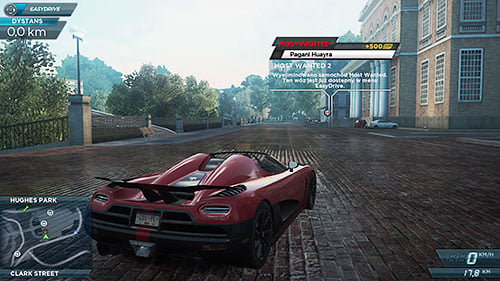
Last week, I was stranded at my mom's house. I just wanted to go up for a weekend, but ended up staying for the week because the weather was less than ideal for travel. Plus, my car was in the shop for repairs, and there wasn't really a point to getting it since I wasn't going anywhere with the weather being what it was. Yet, I still had the need to be mobile, to move, to drive. Luckily, EA Origin was giving away copies of Need For Speed: Most Wanted to its members. I decided that free was indeed free, and downloaded it to my computer. I spent a lot of time with the game that week. I also realized that this is something that I do when I can't really go anywhere. I like to play games where I can drive around, and go wherever I want to at my own volition.


There is something freeing to open world games, but I guess that's the point. These types of games give their players the freedom to write their own stories, or just give them the opportunity to simply exist in another place and time. For me, I like games that give me some kind of vehicle to drive. I guess I just like being mobile and seeing things pass by as I roll past. Need For Speed: Most Wanted is not the greatest open world driving game that I've played, but I shouldn't look a gift horse in the mouth, as the saying goes. It was nice to stretch my legs out, so to speak, and drive really fast, to where I wanted to go.


I hate car troubles, and I hate being without a car. I like to go places, even if it's just to work. I don't mind driving either, unless the weather is poor. In games like NFS: Most Wanted, I don't have to risk life and limb to drive somewhere. In fact, driving dangerously is what that game is all about.


Grand Theft Auto V was a game that I played a lot during the summer when my old car was on its last leg. It was nice to drive around in sunny Los Santos in a car that was much nicer than mine, and didn't bellow smoke every time that I stepped on the gas pedal to move away from a stop light. I liked having the freedom of driving on the high way, or going up north to Blaine County, and just driving laps around the entire island city of Los Santos. It was a liberating and introspective experience.


People have different places that they go, or things that they do to think about things and meditate. I often think a lot when I'm on the road. Sometimes I get so lost in thought that I occasionally miss my exit or turn. I kind of get the same feeling when I'm playing video games and I just have the opportunity to drive around without having to worry about gas prices, or how much fuel is left in the tank, or if my car is even going to start today. There is a knowing peace in having a reliable car that I don't have to worry about.


I think that games like these can offer serenity, and a place to think, because sometimes the world can be chaotic, and a loud cacophony of stress. Video games don't often have these kinds of stresses. They are an escape. Games can be a place to find peace, because they are a perfect system, of sorts. When we play a certain game, we understand its mechanics and rules. We know how things work, and sometimes we can break those rules and mechanics to have a bit of fun. Yet, there is still the understanding of the causes and effects that will occur when specific actions are taken. In this, there is harmony.