Friday, July 29, 2016

Ready For Anything.

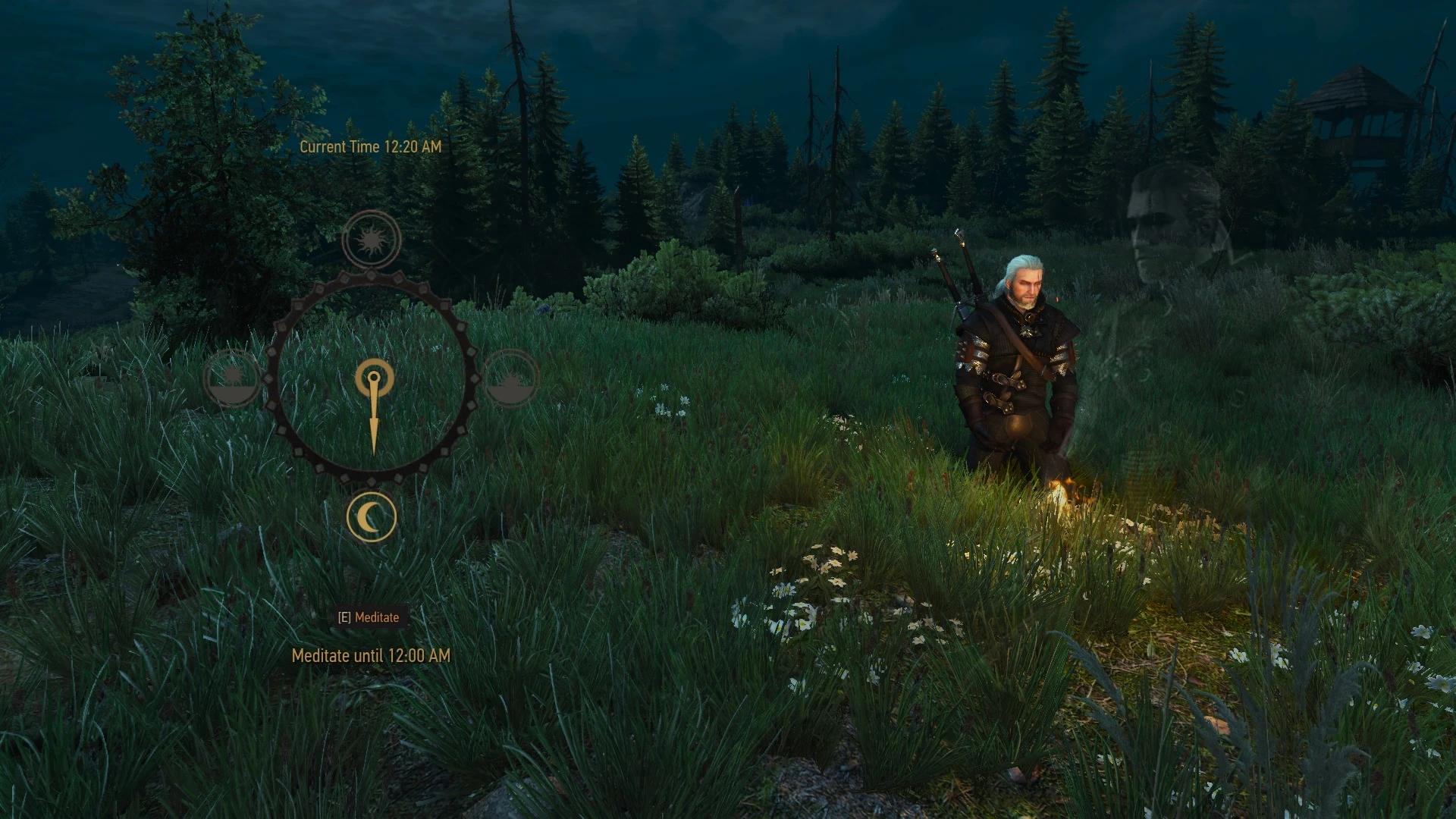
There are two kinds of people in this world: those who prepare and plan ahead, and those who just wing it. I, myself, fall into the latter of those two camps, and it's gotten me pretty far in life. However, I know that if I actually took my time and planned a little bit, and maybe actually give the future some thought, I would make it further. Recently, I finished playing The Witcher III, which is all about planning ahead.


The Witcher is a series that has been going on for a while now, and I decided to jump in on the third game. Turns out that was okay, because everything was so well made that I immediately fell in love with it. The game is unlike most others that I've played before. Sure, I have played Skyrim and The Legend of Zelda, but Witcher does things a bit differently. The game makes you choose. Now, most games will tout "game changing decisions" on the back of the box, but those are primarily binary choices between what is clearly good and clearly evil. Not so much with The Witcher, however. Witcher has players making decisions both narratively, and mechanically. 


What I mean by this is: that the player much choose how to go about advancing their character; not just with equipment and weapons, but also with perks and abilities that come with leveling up. In most games, players can level up, and up, and up, and up, until they become nigh unstoppable and a one man army that is close to godlike status. This is because the game will allow players to pick every perk and point along the way to the top of that characters tree (a list of perks and abilities that are placed along a path that branches out, resembling a tree), and let them keep each and every single one. Even the lower level ones that aren't even that effective anymore. The Witcher III only has so many slots that the player can designate these perks/abilities to, forcing them to choose what to improve, what ability to keep, which ability to sacrifice, and what ability to go with next. This doesn't prevent players from becoming stronger, but rather, it allows players to become more invested in the path that they take when forming their character.


How does the player want to play? Do they want to be stronger with magic? Do they want to be stronger with sword combat? Do they want to become more adept at alchemy, and making their potions and oils last longer and be more effective? This is how The Witcher III makes players choose and plan. Other RPGs will also force players to choose how to build their character, but those have set classes that they are constrained to. The Witcher III allows players to branch out a bit more, and create a character that is uniquely their own.


Another way in which The Witcher III helps players to better plan ahead is with its potions, oils, and decoctions. Potions are pretty common among video games of all kinds, but Witcher III treats them differently than most other games. Each potion has a toxicity rating that limits the use of them. Cutting off any player that wants to down a potion of regeneration, followed by a potions of greater strength, followed by a potion of damage reduction. Plus, players can also brew new improved versions of the potions that they have by finding the recipes and ingredients in the world of the game. Players can also learn the different kinds of plants and elements that they need for specific potions. Being able to find a specific plant and identify it in the world, is a pretty cool feeling, and knowing what it is for is even more cool. It gives off the vibe that you're a true survivor, and that you know the lay of the land and you can live off of it, because you're a tough guy/girl. The game itself also strongly advises the use of these potions that the player can craft as they are not invincible. Players should have a decent selection of potions to use before heading into a battle. Whether that is taking on a camp of bandits, or delving into a monsters layer, players need to be prepared.


Speaking of monsters, players are often encouraged to read up and research their prey. As the main character of The Witcher is a hunter of monsters, he should know a thing or two about them. Players can take a look at the bestiary and learn about the creatures that they have fought, and are going to fight. What their weaknesses are, what spells to use against them, what kind of creature they are, where they can be found, and what strategies to use when fighting them. The bestiary is a wealth of knowledge that I spent more time than I thought that I would reading. Usually codex entries in games are either insignificant, or just plain boring. The bestiary in The Witcher was not only useful, but it helped to build up the world of the game.


Finally, there is a sort of "detective" portion of The Witcher III. The main character of the game has super human senses that allows him to be a better tracker. Couple that with his extensive knowledge of monsters and the world around him, and you have yourself a pretty savvy detective. Often times, players will have to track down monsters, and solve problems of the local populace. This sometimes involves inspecting some gruesome scenes of mangled corpses. The game gives players the options to inspect these bodies in an effort to gain more information about what exactly they are dealing with. The descriptive dialogue that comes from the main character gives players insight into his thought process and give them a heads up about what they are going up against. My favorite part about this is how practical all of this is. While Geralt, the main character, might have superior senses, and he is also dealing with mythical beasts: basic sleuthing still gets the job done. Examining claw marks, blood trails, and the surrounding crime scenes help to gain information about what happened. Just like normal detectives do. With wit, cunning, and just plain smarts, players gain a huge sense of satisfaction from tracking down the truth.


Most other games don't really give players this kind of experience. They just trundle through them, with little to no involvement. Skyrim, for example, just has players faffing about in the sandbox that is the game world, taking on quest after quest, without having to worry about the consequences that they yield. Plus, as far as preparation is concerned, most players just get by with winging it. There's nothing wrong with that, though. Shooting and looting is the name of the game in Skyrim. Players can freely wander about the landscape, adventuring and having a good time. Clearing out dungeons, bandit camps, caves filled with monsters, and exploring ancient temples is fun, but all seems... rote. Don't get me wrong, I've spent a lot of time playing Skyrim, and some of the best adventures I've had have been going from one area to the next, exploring different monuments and landmarks to discover new things. However, because of my play style of purely magic use, I was death incarnate by about level twelve. It was a simple plan of attack: sneak as much as possible, then go loud and proud with firebolt. Nothing could stand in my way. If I ever ended up running low on mana, I would drink whatever potions I had found randomly along the path, and be back at it. If it ever so happened that I didn't have any of these mana restoring potions, I could just wait for it to refill, because it doesn't take all that long to refill. How is this different from The Witcher?
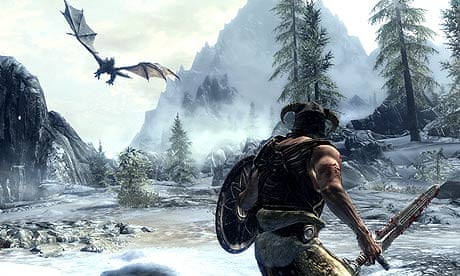


 Well, I feel more invested in all of the items that I have on my character. The potions I have are because I gathered the ingredients myself. The equipment I have is crafted by a blacksmith that I had to travel the world to find, so that I could have top quality gear. Some pieces of my loadout have a story behind them as to how I got them. In Skyrim, rarely do I get the sense that the things that I have on my person have any sort of bearing or investment on my character. Sure, some items were acquired after completing a quest line, though these quests were completed solely for the purpose of acquiring this gear. It's just another step to optimize damage output and self sustainability. I'm simply just improvising my way through the game. Some things that I pick up on the way only seem temporary. The weapons, equipment and spells that I pick up are only temporary.


The same could be said for the Legend of Zelda franchise. Players go through these games picking up specific items along the way. Some items are universally helpful, but for the most part, these items are only used in the temples that they are found in. They're place outside of these dungeons are rather pointless.They just occupy space in your inventory, never to be used again. This kind of reminds me of how I stumble through life.

I wish that I could be more well equipped like The Witcher. I wish that I could plan things out more. I'm sure that I have the capacity to do so. I like the feeling that The Witcher gives me when I am prepared. I feel so smart, knowing that I picked the right spells to invest in, the right potions to have equipped, the skills that I leveled up. I am invested into making the character the best that they can be with the limited amount of resources that I have, and boy do I know a lot about having limited resources. Careful thought and planning can change the outcome of the future. It's like when you study for a test, rather than just trying to go from memory of what you had heard in class. Some people are really good at paying attention in class, and listening to what the teacher had to say. Others are not. Perhaps it's time to make a change in my life where I maybe do some planning ahead, in stead of constantly trying to just wing it in hopes of putting one foot in front of the other without tripping over them.


Wednesday, July 27, 2016

That's One Giant Step...

Let's talk about fear. Not the kind of fear that you feel when you see a scary monster, or some kind of horrifying scene with blood and what not. I want to talk about the kind of fear that most of us experience daily: the fear of the future. Right now, I find myself coming up to a rather large fork in the road of my life. I could stay the course and play it safe, or I could take that turn and change things. I suppose that this option has always been available too me, yet the possibility for this change feels more tangible than it ever has before.

Last night while at work, I found myself stressing about this decision and mulling it over and over and over again. While I was having a self contained panic attack, I was also working at my job, which required me to push skids of boxes across the floor like Link from the Legend of Zelda pushing large boxes to solve puzzles.


This got me thinking about my boy Link, and what he was doing before he set off on his adventure that would earn him the title of "The Hero of Time". The aforementioned fork in the road of my life would be a dramatic change for me, as was the decision for Link to step outside his house and set off on his adventure. What I find to be confusing, and rather envious of, is Link's willingness to do so. Link does not stress about what he is leaving behind. Nor does he fear the potential failure of moving ahead. Link just heads out, without a second thought, because that's what he's supposed to do.

Life is nothing like a video game. Things are way too open ended. There are too many decisions to be made that can change our lives on a daily basis. We fear these decisions, because we fear change. We fear the unknown consequences that they will bring. Our digital heroes that we see on screen do not have these fears. Even though we are the ones who are controlling them, they do not worry. We, who have these fears and anxieties. Why do we fear so much? Why are we so afraid of change? Why do we hesitate to step out the door, and set off on adventure?

The consequences of playing a video game and failing is but a simple reset to the last check point, but failure in life could potentially lead to a permanent Game Over. The reason that I stress about this change: is because it's a big deal. It isn't a simple matter of a change of scenery, but also a change in the course of my life. I feel as though making this change could, well, change everything. Sometimes I wish that life were as simple as a video game, where I could follow the path, and end up being the hero. I wish that I didn't have the anxiety of potential failure, like the characters that I play in video games.

What if I took a page from Link's book, and just went out on blind faith that this change was going to be the next step in my quest?  Link does not fear failure. Nor does he worry about letting people down. Link strides out in confidence, and does not look back. I don't think that Link knows that this adventure would be as daunting, or thrilling as it turns out to be. Link doesn't become the hero that he is because he wants the fame that goes along with it. Link doesn't want to have songs written about him. I'm not even sure he does this because he knows that it has to be done. I think that Link takes this step out on faith because he wants change. What is Link doing at the start of every Zelda game? Pretty much nothing. Link is just a normal dude, doing normal things. When the opportunity presents itself, he goes after it.

So, here I stand, seeing that giant fork in the road that could change the course of my life. I'm not sure if it will be for the better. I'm not even sure if it is the right thing to do. But, maybe, I should take a stab at it anyway, because it could lead to a new adventure.


Tuesday, July 26, 2016

The Journey, Not The Destination

Throughout my life, I've always seen the goal of where I want to be. I've just never seen the path to get there. I had the realization last night, that maybe I should start enjoying life more, and maybe living in the present, as opposed to trying to figure out how to reach the goal. Don't get me wrong, it's important to have goals to strive for, but it seems as though we are a culture that is obsessed with reaching goals and accomplishing things. I feel as though we scarcely take the time to enjoy the things around us, or we are so caught up in trying to make ends meet, or doing what it takes to reach our goals, we don't really see what's around us. I think that if we took a page from the time that we put into video games, we might learn a thing or two.

Recently I completed The Witcher III: The Wild Hunt and its expansions. I played the main game and the first expansion the way that I eat my plate when I go out to eat: I finish the main course first, and then move on to the sides. I don't particularly think that there is anything wrong with this, especially since the writing in the story makes it seems as though I am so pressed for time, but perhaps I really missed out on enjoying the world of Witcher III. By the time I got around to obtaining the second and final expansion, Blood and Wine, I decided that I would do just that. It also helped that the expansion gave a nice change of scenery as well. I took my time with the game, and decided that I would hunt down side quests, and just explore. I was a pretty well experienced Witcher, and I had some good equipment to boot, I was going to go wherever the wind took me. Because of this, I enjoyed myself. I took on any side quest that I could find, and really enjoyed each one. They were filled with interesting characters and memorable moments. If I had gone my normal route of focusing on the main quest, I probably would have ignored all of these little moments.


Games don't often encourage side quests. They are constantly portrayed as something that is secondary, even tertiary, and yet the writers and designers spent just as much time on them to make sure that they would be a quality experience. Well, at least for the bigger side quests any way. Take for example: Batman: Arkham City. In this game, there are several side quests that the player can choose to pursue, and each one feels like it could be its very own game. The story and characters are well crafted, and the overall experience of them feels fulfilling. However, the game does nothing to stress their importance, even though during the course of these quests the lives of several characters are on the line. If Batman were to just ignore the precedent set by his psychotic foils, the lives of the innocents would be forfeit. It seems rather odd that Batman has the option to ignore saving people. After all, that's what he does. What if a game actually forced the player to focus on side quests?


Mass Effect 2 is one of my favorite games of all time. It's in my top 5. What ME 2 does, is just that. The game forces players to take on side quests, and each one is amazing in its own way. If you've never played the game before: Commander Shepard is at it again, fighting off evil aliens that are reeking havoc across the galaxy. However, because of the mystery of these evil n'eredowells, their tactics are just as confusing. The evil alien race in question are the Collectors, mysterious bug-like beings that only appear when they want to, seemingly at random. This time around, they are directly attacking small human colonies and abducting everyone there. As is befitting to their mysterious nature, the Collectors use hit & run tactics. They come, they abduct, they leave. So, during this time of the Collectors absence, Commander Shepard has some time on their hands. Apparently, a lot has happened with the crew since the good Commander has been gone, and some things need sorting out. These are the side quests of the game. Throughout, the player will find themselves being asked to speak privately with each crew member about something that is bothering them. Because of your attachment to the characters, and the need for them to remain focused during the final mission of the game, you happily oblige to hear them out. Each crew member tells their story of what has been on their mind, and through this, you learn more about their past and personality. To see each character reflected in the nature of the missions that are provided is something that is just way too cool! Each mission feels tailor made to the respective character. While Commander Shepard feels pressed for time in stopping the Collectors; them being gone puts my mind at ease while I'm helping out my crew members. This, I believe, is how side questing should be structured.


Side quests make up a majority of what RPGs are, and yet most of them get ignored, or are just a poor excuse for XP grinding. Side quests should enrich the world, as they are a good reason to explore it. They can be a way for players to learn more about the universe that they are exploring, and yet the most common side quest is something along the lines of "go to this place that I've marked on your map and bring back item X to me". That's it. That's all there is to it. The experience of doing such a thing turns out to be trivial and not even worth doing, as the in game reward isn't even worth it.

Now, maybe we have something in life that we can do with ignoring, and maybe there are some things that just aren't even worth looking into. What if, though, we took a chance and changed course? Our end goals will still be there, because the path is unclear. We may not know exactly how to get where we want to go, but if we keep working towards it, we might just make it. Even if that means taking a detour every once in a while.


Wednesday, June 29, 2016

Bring Back Splitscreen

When I think of gamers, what comes to mind is not a pretty picture. Gamers are a group of people that are foul mouthed, inane, insensitive, hateful, sexist, elitist, uninformed, vulgar, angry, pretentious, mean, apathetic trolls who don't care about anybody but themselves. When did it come to this? When I think of gamers back in the day, we were all friends. We would go to each others houses and play video games together. We would exchange cheatcodes, and learn from one another about different techniques in our favorite video games. What changed?

Well, the internet and online multiplayer happened.

Ever since its introduction, the realm of online multiplayer has been a hostile one. I remember when I first jumped on Xbox Live with Halo 2, and the horrible things that I would hear from kids who should not have been using the language that they were using. I mean, there's nothing wrong with trash talk, but there's no call for such hateful speech. The nature of competitive games is a hateful one: I beat you, so that means I'm better. This gets in the way of us gamers recognizing that we're all gathering in the same place because we love the same game, and instead of gushing over it and being passionate about this game, instead we throw caustic comments at one another because we don't like the way the other person is playing. Gamers speak with prejudice and inconsideration. They don't think that there's another person on the other end of that headset. They don't think that maybe it could actually hurt someone's feelings with all of this hate. If gamers were able to play in the same room together, I guarantee it would be a different situation.

There have been studies conducted that just fifteen minutes of playing the game Rock Band with another person can form a stronger bond between two people. That's because they're working together, and they're playing in the same room together. In my experience, my friendships have gotten stronger from playing competitive games together. Super Smash Bros., Mario Kart, Mario Party, Soulcalibur, and various other competitive multiplayer games have help make lasting memories for me. Those nights are the best! When all of my friends come over to play video games, and we just have fun. That's what those games are about. When playing online, you have to have a lot of patience, and the will to stay in it, even though you may lose time and time again. When you play with friends, it's different. Your opponent is right there, and you feel that connection with them because of their presence.

Video games these days don't have splitscreen anymore, or at least it isn't a priority for them. I don't know why. Well, I have a guess.

By making games a single player experience, with online only multiplayer, it forces gamers to buy more copies, because they can't play together. Yet, this method of multiplayer design constricts the community of players. Because of that anonymity between other gamers, friendships are difficult to make. Even if the other player was friendly and cooperative, the chances of playing together again are rather slim (for me at least). I know that games like The Division can't really be expected to have splitscreen, but imagine if it did. Imagine going through the streets of Manhattan with your best friend, and kicking butt together. That's fun. When you play online, it's more of a hassle than anything else. It involves scheduling, and coordinating, and hoping that you'll be able to end up on the same server. Sure, you have to set up a date with a friend to come over and play games together, but that's a lot easier. And there's also a high chance of pizza!

So, are the developers at fault for separating gamers? Yes, but in a small way. Gamers are also the ones who push other gamers out. Gamers are the ones who spit out hate. Gamers are the ones who don't care about anything but achieving victory in a video game, and are unconscious of the things that they say to one another.

Gamers! Unite as a group of people who enjoy video games together. Be kind to one another, even if the other player isn't as skilled as you are. Be encouraging, and always be willing to help. Help to cultivate a community that is friendly and accepting of one another and those who are new. Online multiplayer gives us as gamers to meet people from around the world, and form strong bonds of friendships. Do not look upon these people as their digital avatars, but as real people with feelings.

Friday, June 17, 2016

The Bigger They Are

The story of David and Goliath is one that everybody has heard at least once. It's a story of a young boy who defeats what is thought to be an unstoppable warrior. This fight was clearly one sided to on lookers, and it seemed as though the odds were stacked against young David. However, in spite of all of this, Goliath was defeated. Lately, I've been listening to various podcasts while at work, and one of them was discussing this very fight. The podcast was the TED Talk radio hour by NPR and the theme was misconceptions. The podcast opened up with this talk about David and Goliath, and spun it in a way that made it seem as though Goliath was the one who was truly at a disadvantage. Of course, this got me thinking about video games.

Video games always seem to put players up against seemingly impassable obstacles, and yet, every time, players surpass and overcome these blockages. What's the point of putting up these walls if the player is just going to knock them down anyway? It's to make the player feel accomplished. Often in video games the player is a one man, or woman, army who can topple any kind of defense that is in front of them. However, this isn't without some challenge. Players who are persistent will overcome anything. Whether that is an enemy army, or a giant that is so large that it can't even fit on the entire screen.

The game that illustrates the David v. Goliath scenario the best is, of course, Shadow of The Colossus. Players take control of a regular dude with a sword, that he really doesn't know how to use, a bow, that he's actually pretty decent at using, and his trusty horse, who is the best horse in all of video games. The player character isn't really anything special. He starts off pretty weak, he's uncoordinated, and he generally has no idea what he's doing. The character is pretty darn relatable, he's about as lost as you are. When players come across the first colossus, they are stuck with awe and terror. The same goes for every other colossus that follows. Because, again, you're just a dude, and you're not really trained in the ways of killing gigantic stone beasts with weapons that are bigger than a double-decker bus. Each colossus presents a seemingly impossible challenge. How is someone who is just a dude going to take down that enormous monstrosity? Well, with a bit of courage, and a lot of wit.

The thing is, that while these colossi are immense and extremely intimidating, most of them are slow and lumbering. Players are much faster than them, so agility is on their side. Often times, players will have to use the environment, and the colossus' rage to manipulate them and break down their defenses. So logic is on the player's side as well. These colossi may be huge and powerful, but each one of them can be defeated. It may seem impossible that a character that seems to hit the tip of the bell curve on every test can defeat these things, and yet he does. Every time. This is similar to the TED Talk that I referenced earlier.

The speaker spoke about the disadvantages that Goliath may have had, such as his abnormal size, and how people who are of that size can suffer from poor eye sight and slower cognition. The speaker also talked about how David knew exactly what he was doing, and how the sling which he used to defeat Goliath was no joke. Apparently, in the days of David and Goliath, the sling was used in artillery barrages alongside archers. Often times, soldiers who used slings were so proficient with them that they could hit a bird in flight. David most likely used his sling as a means of defense against predators to the sheep in the flock that he tended to. David could probably also hit a bird in flight with his sling. So, a very large man standing still across from him wouldn't have been that much of a challenge to hit right between the eyes as he did. While it may seem like David was at a disadvantage until the fight was over, it turns out that David had the upper hand the whole time.

This is the kind of scenario that players in video games are faced with every time. Whether it's one big enemy, or a whole army of them, players often fight and win these battles. Video games create the illusion that the odds are stacked against them, and that what they face cannot be beaten. Often times, that is true, but after a heavy dose of determination and even more retries, players come out on top.

I think that the same could be said for the things that we face in life. While most of us will not fight armies all by ourselves, or go head to head with a giant monster, we still have these things in our lives that stand in our way. It may seem impossible to get to where we want to go, or to get out of our dead end jobs, but with the will and determination to do something about these issues, often times, we can overcome and achieve our goals. It's difficult, and it's dangerous, but it is worth doing.


Thursday, June 2, 2016

"It's Just A Game"

As we go through life, we experience much. We live, we learn, we love, we hurt. It's all part of the process of growing up. Along with growing up, we're also raised on certain things. Whether that's Star Wars, Disney Movies, Saturday morning cartoons, video games, or any other thing to keep us entertained. While a majority of society will see these things as merely for children, it impacts us in a way that they just don't seem to comprehend.

For me, video games are a huge part of me. They are so much more than a pass time. Video games have strongly affected me in the way that I think, solve problems, prioritize, work, and play. Games have changed my life. Games have SAVED my life. They mean something to me. For people to dismiss video games as simply a waste of time is to dismiss me as an individual. I have spent so much time with video games that they are a part of me I adore video games. I see them as something more than what others see. I find obscure angles and insight that others can't see right away. I have a very close relationship with my video games. They are a part of me. It isn't simply a way to spend an afternoon. I wouldn't say that is an investment, though it might be if my dreams come true and I become a video game journalist, but rather an appreciation of the medium of video games.

I find that too often people who aren't really a part of this generation, or into different fandoms don't quite grasp the emotion that we feel when we are around something that we love. I think back to when Jeremy Renner, the actor who plays Hawkeye in the Avengers movies, made an offhand comment about Black Widow's character. The internet, as it tends to do, exploded with rage. I didn't much care for his comments either, but I understood where the internet was coming from. These characters in the Marvel Universe have been around for a lot longer than these waves of movies have existed, and Black Widow is one of the more iconic characters. Heck, they all are. Fans of Black Widow look up to her character, they aspire to be like her. They appreciate her capacity to get the job done, and her confidence to accomplish her task. Black Widow is a really cool character! And when an actor who portrays one of those characters that fans look up to and admire is not invested into said character, simply because they are a work of fiction and they do not exist isn't the best thing for your image. Nor is it a very kind thing to say to fans of that character.

I've never met Luke Skywalker, but I feel like I know him because I've seen his journeys. I admire Luke Skywalker for his transformation from young, restless farm boy who longs for something more, to a Jedi master. I want to be like Luke. I want to be a Jedi. I want to be a force for good, and justice across the galaxy. While I can't actually travel across the galaxy and use a light saber, I can still take a few notes from Luke's book. The Jedi are not a real thing, but they are made up of things from this world. The Jedi are protectors of those who cannot defend for themselves, they fight against those who would do harm to the innocent, and they bring peace and balance wherever they go. I think that those are some things to aspire to. I'd like to live my life like a Jedi. I may not be able to move objects using the force, or pilot an X-Wing fighter, but I can do my best to protect those who can't protect themselves.

Art is something that is made to make a statement. It is something that is created by the artist to leave their mark on the world. It is a message to its audience to impact or influence them in someway. Sometimes for good, some for bad. But art is still something that affects every single one of us, and to deny that impact simply because it's "made up", or "just a video game (movie, tv show, cartoon, book)" is so harmful. People need heroes. They need someone to look up to. We can't all be Captain America or Superman, but we can try to follow their example and do what is right. These characters are models of virtue... well, not always, but they still have values that are worth fighting for. I can't always rely on the people in my life to show me what is right or wrong. We're human, after all. But these fictional characters, that can be crafted to be the very ideas of truth, justice, and righteousness can be a better role model.

So, no, it is not just a video game, it is not just a movie, it is not just a TV show, it is not just a comic or cartoon. It is something that is a part of us, and we look up to and aspire to be. We love our passions. We love our fandoms. We love our heroes. They may not be real, but they stand for something that is, and we can do our part by aspiring to be like them.